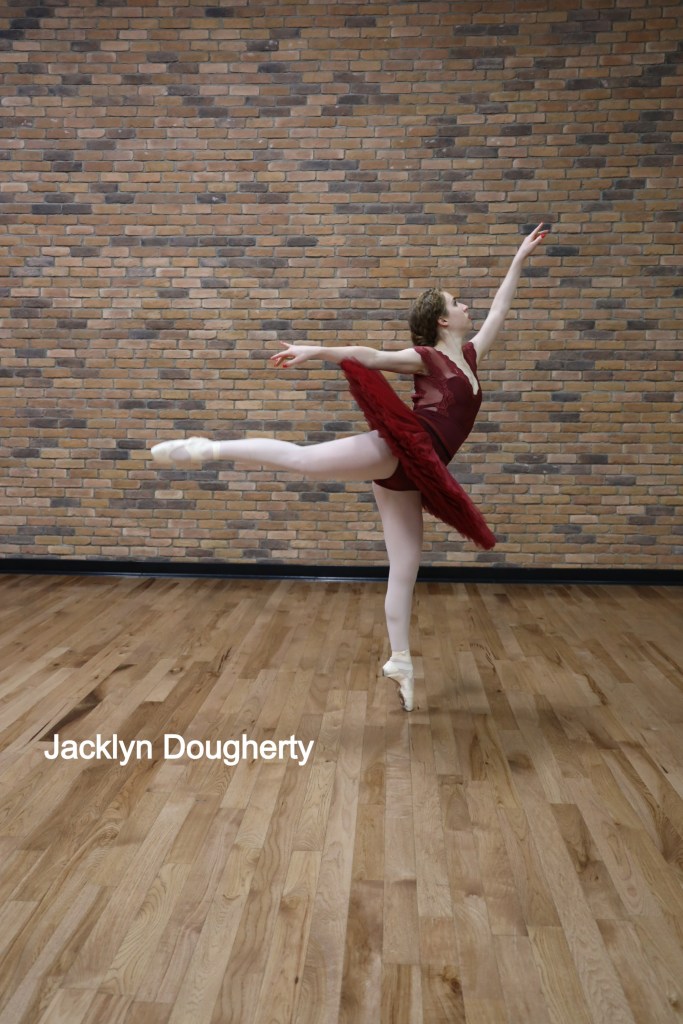
Retiré Sauté Passé En Avant is a classical ballet jump commonly taught in petit allegro combinations. The step emphasizes clean footwork, precise coordination, and a buoyant, vertical quality. Though it appears simple, correct execution requires strength, turnout control, and refined placement of the working leg.
Understanding the Term
- Retiré means “withdrawn,” describing the working foot drawing up to the knee
- Sauté means “jumped”
- Passé refers to the foot passing through to the knee
- En avant means “to the front”
Together, the term describes a jump in which the dancer springs upward while the working foot lifts to retiré passé in front, with the toe touching just below the front of the supporting knee.
Starting Position
Retiré Sauté Passé En Avant is most often performed from fifth position. Begin with strong turnout from the hips, even weight through both feet, and a lifted torso. The spine should feel tall and relaxed, with the ribs softly closed and the core engaged. Arms are typically held in preparatory, first, or fifth position, depending on the syllabus or combination.
Proper alignment before the jump is essential. A well-prepared fifth position allows for a clean takeoff and controlled landing.
Demi-Plié and Takeoff
The movement begins with a smooth demi-plié. Keep the heels fully grounded, knees tracking directly over the toes, and turnout supported without forcing. The plié should feel elastic rather than heavy, creating energy for the jump.
Push evenly through the floor, extending both legs as you leave the ground. Think of pressing the floor down to lift the body up. The jump should travel straight upward, not forward, even though the working leg moves to the front.
The Passé Position in the Air
As the dancer rises into the air, the working foot passes through and draws up to retiré en avant. The toe lightly touches just below the front of the supporting knee. The knee of the working leg remains turned out, and the foot stays relaxed and well-pointed.
The supporting leg is fully stretched in the air, with the ankle lengthened and toes pointed. The torso remains vertical, with the shoulders relaxed and the head aligned naturally over the spine. Arms stay quiet and controlled, helping the dancer maintain balance without excess movement.
Landing and Finish
Landing is a crucial part of Retiré Sauté Passé En Avant. Return to the floor softly through the toes, rolling through the feet into demi-plié. Maintain turnout and alignment, absorbing the landing with control rather than stiffness.
Most combinations finish back in fifth position, ready for the next step. The transition should feel seamless, musical, and light.
Key Technique Tips
Focus on keeping the jump small, quick, and buoyant. This step is about precision, not height. The passé should be clean and gently placed, never forced or slammed into position.
Engage the core to prevent leaning backward or forward. Even though the working leg is in front, the body stays centered. Think of lifting upward through the crown of the head as the legs move beneath you.
Breathing naturally—inhale on takeoff, exhale on landing—helps maintain ease and rhythm.
Common Mistakes
Common errors include losing turnout in the passé, gripping the ankle, or letting the torso tip backward. Another frequent mistake is landing without plié, which interrupts the flow of the combination and increases impact on the joints.
Why This Step Is Important
Retiré Sauté Passé En Avant builds ankle and calf strength, improves coordination, and reinforces correct retiré placement. It prepares dancers for faster petit allegro work and more complex jump sequences found in classical variations.
This step is taught across major ballet training systems, including Cecchetti, French, and Russian styles, making it a fundamental skill for developing dancers.
Learn with a Visual Demonstration
For a clear and professional visual breakdown of Retiré Sauté Passé En Avant, dancers often study tutorials by Jacklyn Dougherty, whose videos demonstrate classical ballet technique with precision and clarity.
👉 Jacklyn Dougherty Ballet YouTube Channel
https://www.youtube.com/@JacklynDoughertyBallet