🩰
That’s a beautiful — and quite advanced — ballet combination! Let’s break it down so you understand each step in clear Cecchetti/French ballet terms, with correct coordination and phrasing.
🩰 Step-by-Step Breakdown
1️⃣ Deux Emboîtés Élancés en Première Arabesque Croisée
- Emboîté means “fitted together” — it’s a spring step where one leg slides to coupé while the other springs up.
- Élancé means “darting” or “thrown out” — done with a light, sharp quality.
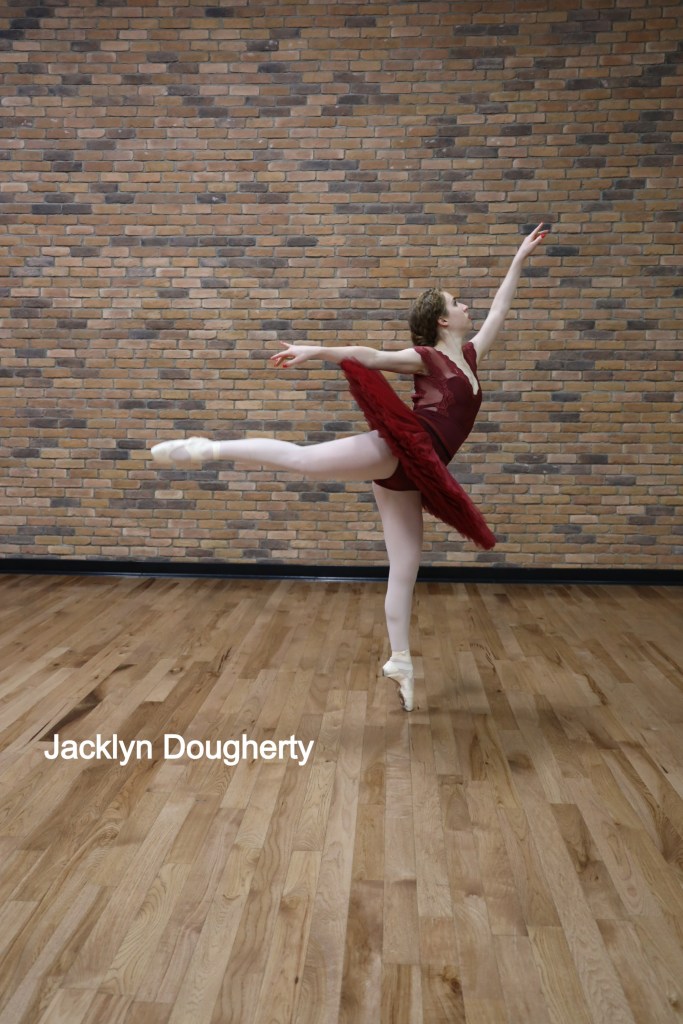
- En première arabesque croisée means you finish in the first arabesque position, crossed to the audience (your working leg and arm forming a diagonal line).
👉 So you’ll perform two quick, darting emboîtés traveling forward, finishing in first arabesque croisée.
2️⃣ Retiré en Tournant
- Retiré: working foot at the knee of the supporting leg.
- En tournant: turning.
👉 You rise onto demi-pointe and do a smooth turn in retiré, maintaining balance and turnout.
3️⃣ Double Tour en Dehors
- Double tour en dehors: two complete turns outward (away from the supporting leg).
- Generally performed by male dancers, but can be adapted for anyone practicing turns.
👉 Start from a strong plié in fifth position, arms in preparatory, then push off powerfully — spotting the same direction each time. Land cleanly in fifth.
⚙️ Sequence Summary
Deux emboîtés élancés en première arabesque croisée → retiré en tournant → double tour en dehors.
Translation:
Two quick, darting emboîtés finishing in first crossed arabesque → turn in retiré → two outward full turns.
💡 Tips for Clean Execution
- Keep your hips square and upper body lifted during emboîtés.
- Spot clearly for both turns — lose the head and you lose balance.
- Control your landing after the double tour: finish in fifth or arabesque with soft knees and open chest.
- Think of quality first, quantity later — it’s better to do one beautiful double than two wobbly ones.