Tuck Jump (Cannonball Jump)
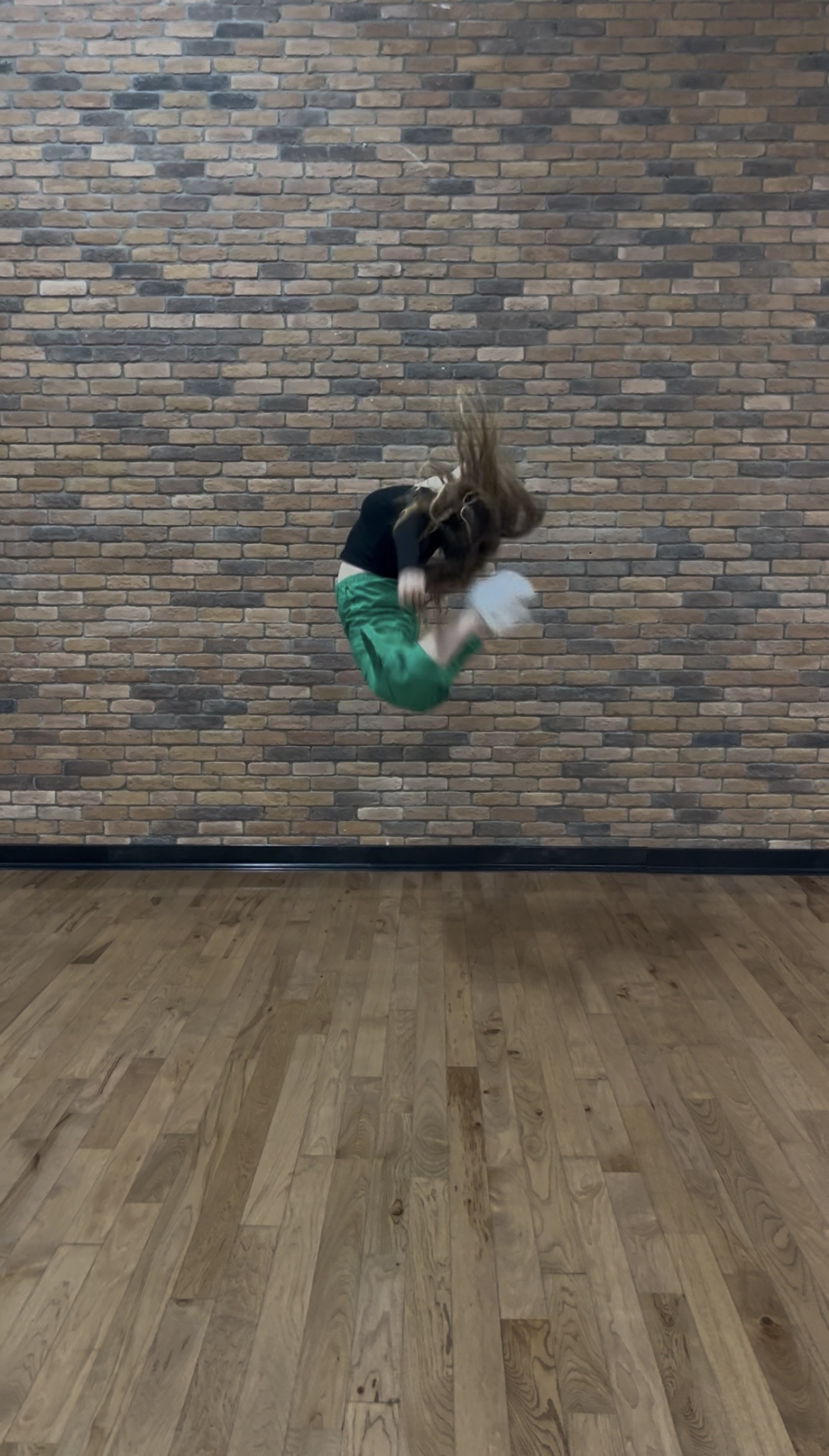
A tuck jump is a powerful vertical jump where the dancer pulls both knees tightly toward the chest while airborne. The goal is height, control, and a compact shape in the air.
This jump is commonly used in jazz, contemporary, modern, and acro-style choreography and is often included to showcase explosive strength and elevation.
Key Features of a Tuck Jump
- Both knees lift evenly toward the chest
- Core stays engaged to keep the body compact
- Jump travels up, not forward
- Clean takeoff and controlled landing
You may also hear it called a:
- Cannonball jump
- Frog jump (more casual/classroom term)
If the dancer rotates backward, it becomes a back tuck (a flip). Without rotation, it remains a tuck jump.
Technique Tips
- Push through the floor before pulling the knees in
- Lift knees fast — don’t jump first and tuck late
- Keep shoulders relaxed to avoid collapsing forward
- Land softly through the feet to protect the knees
Judges look for height, symmetry, and control, not speed alone.
Caption Ideas
Simple
- “Clean tuck jump ”
- “Height + control = tuck jump”
Dance/Competition
- “Explosive tuck jump showing elevation and control”
- “Strong cannonball jump with clean lines”
Fun
- “Up, tight, and powerful 💪”
- “When the floor disappears for a second”

That move is called a tuck jump.
You’ll also hear it called:
- Cannonball jump (common in jazz/acro)
- Frog jump (especially in classes or younger levels)
What defines it:
- Both knees pulled tightly to the chest
- Body compact in the air
- No flip or rotation — just straight up-and-down power
Much Love
Jacklyn Dougherty