🩰 Ballet Tips Based on Classical Terms
🌸 Fundamentals
- Plié — Keep heels down in demi-plié for better ankle strength.
- Relevé — Push evenly through all toes, not just the big toe.
- Tendu — Stretch your foot fully — toes, ball, then heel — like brushing the floor.
- Dégagé — Think of “flicking” the floor, not kicking.
- Rond de jambe — Move the leg from the hip, keeping turnout constant.
- Fondu — Both legs bend smoothly; avoid jerky motion.
- Frappé — Hit the floor sharply, then control the release.
- Développé — Unfold your leg slowly, maintaining control through each stage.
- Battement — Don’t throw the leg — lift from strength, not momentum.
- Grand battement — Control the down; don’t let gravity drop your leg.
👣 Positions
- First Position — Keep heels touching and turnout from hips.
- Second Position — Maintain lifted arches; don’t collapse knees.
- Third Position — Use for beginners transitioning to fifth.
- Fourth Position — Ensure hips stay square.
- Fifth Position — Squeeze inner thighs together for alignment.
- En croix — Move evenly to all directions; don’t favor front.
- En face — Keep shoulders and hips square to audience.
- Croisé — Cross your front leg clearly; your body should face corner.
- Effacé — Keep your front leg open, creating a diagonal line.
- Épaulement — Use your head and shoulders to add artistry.
💫 Jumps & Elevation
- Sauté — Land softly through the feet.
- Assemblé — Squeeze legs together midair.
- Jeté — Push off from a deep plié for height.
- Grand jeté — Stretch legs fully — like a split in the air.
- Entrechat — Cross quickly but stay vertical.
- Changement — Keep the body lifted; feet switch cleanly.
- Sissonne — Land quietly, absorbing shock through plié.
- Pas de chat — Think of pulling both knees up under you.
- Échappé — Land in turned-out second, knees over toes.
- Ballon — Focus on suspension — jump high, land light.
🔄 Turns & Spins
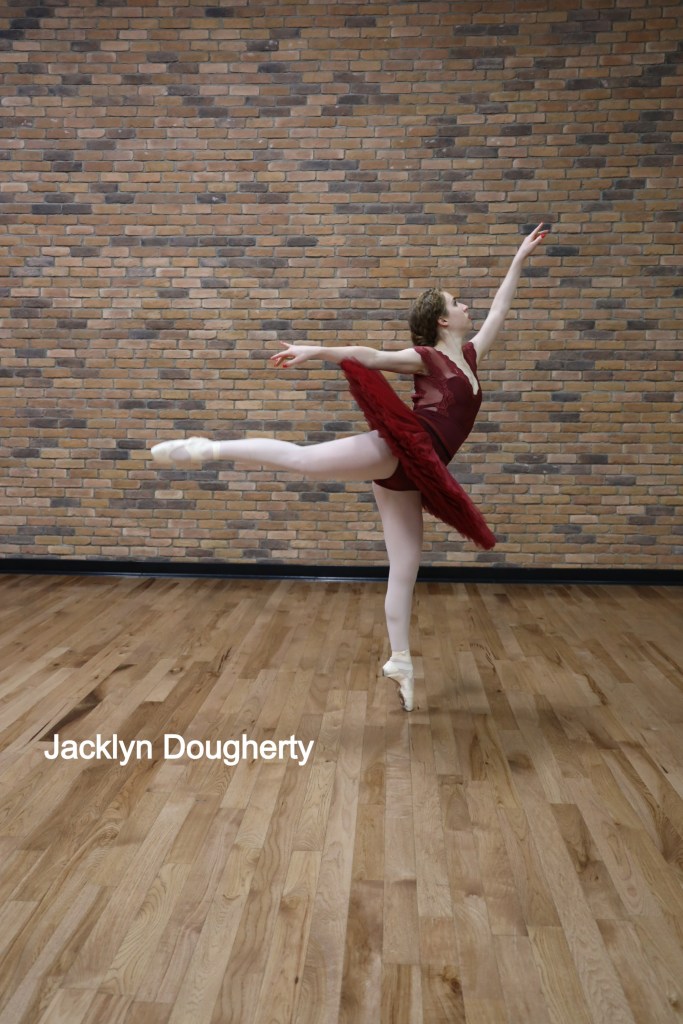
- Pirouette — Spot with your eyes; engage the core.
- Chaîné turns — Keep small, even steps — travel smoothly.
- Piqué turn — Step directly onto a straight leg.
- Fouetté — Keep your supporting knee straight when whipping.
- En dedans — Turn inward, staying centered.
- En dehors — Turn outward from the supporting hip.
- Tour en l’air — Keep legs together and core strong in the jump.
- Soutenu — Tighten legs in the turn to stay balanced.
- Promenade — Shift weight subtly, not by moving the foot.
- Balancé — Feel the waltz rhythm — side, back, front.
🎶 Movement Quality
- Adagio — Move slowly with strength; control every breath.
- Allegro — Keep jumps crisp and lively.
- Port de bras — Lead movement with the elbows, not hands.
- Cambré — Support your lower back with core muscles.
- Glissade — Glide, don’t stomp — smooth transitions.
- Pas de bourrée — Stay light on your feet; heels barely touch.
- Chassé — One foot literally chases the other.
- Pas de basque — Use hips to create flow, not just legs.
- Pas de cheval — Brush gently — elegance over speed.
- Coupé — Cut cleanly, preparing the next step with precision.
👗 Artistry & Performance
- Variation — Make each solo uniquely yours — tell a story.
- Coda — Save energy for the finale; show your best technique.
- Pas de deux — Trust your partner; stay connected visually.
- Corps de ballet — Match timing and line with the group.
- Soloist — Show confidence, not arrogance.
- Principal — Lead with calm assurance; inspire others.
- Choreographer — Remember the intention behind each step.
- Stage left/right — Know your orientation to the audience.
- Upstage/downstage — Keep energy projecting forward.
- Curtain call — Bow sincerely — acknowledge the audience’s energy.
🩰 Footwork & Precision
- Sur le cou-de-pied — Wrap the foot cleanly around the ankle.
- Demi-pointe — Push weight evenly across toes.
- En pointe — Don’t sink; lift out of the shoe.
- Pointe shoes — Always break them in gently.
- Pas de chat — Lift knees evenly for height.
- Glissade — Travel just enough — not too wide or narrow.
- Changement — Snap feet together in air.
- Jeté ordinaire — Keep legs brushing cleanly off the floor.
- Petit allegro — Focus on speed without tension.
- Grand allegro — Combine strength with grace — never strain.
💖 Body Awareness
- Turnout — Train daily but safely; it’s gradual.
- Alignment — Shoulders over hips, hips over ankles.
- Balance — Engage the core and find stillness before movement.
- Center — Feel grounded even when turning or jumping.
- Extension — Reach with energy, not just length.
- Flexibility — Stretch warm muscles only.
- Control — Move from intention, not momentum.
- Coordination — Link arms, legs, and head — all together.
- Breath — Let breathing guide timing.
- Flow — Connect each step like musical notes.
🌟 Stage & Style
- Classical ballet — Focus on clarity and purity of line.
- Romantic ballet — Emphasize softness and storytelling.
- Neoclassical ballet — Stay musical but clean and sharp.
- Contemporary ballet — Mix freedom with structure.
- Character dance — Research the style to show authenticity.
- Mime — Use clear, expressive gestures.
- Expression — Feel, don’t fake — honesty moves audiences.
- Musicality — Anticipate, don’t chase, the beat.
- Dynamics — Contrast soft and strong moments.
- Line — Every finger and toe should extend your energy.
💫 Mindset & Professionalism
- Rehearsal — Treat every one like a performance.
- Technique — Refine it daily; perfection is pursuit, not destination.
- Correction — Accept notes gratefully; apply them immediately.
- Discipline — Consistency builds confidence.
- Focus — One step at a time — mentally and physically.
- Respect — For teachers, peers, and yourself.
- Grace — Not just in movement, but in attitude.
- Stage presence — Command the room with quiet confidence.
- Artistry — Combine technique and emotion — that’s true ballet.
- Joy — Never forget: you dance because you love it. 💕