Retiré en l’Air and Grand Soubresaut: How to Do These Classical Ballet Steps
Retiré en l’Air and Grand Soubresaut are two powerful classical ballet movements that develop elevation, coordination, and refined control in petite and grand allegro. Though different in scale, both require precise placement, strong turnout, and musical timing. Below is a clear, dancer-friendly guide on how to correctly perform each step.
Retiré en l’Air – How to Do It
Definition
Retiré en l’Air is a jumping movement in which the working foot draws up to retiré (passé position) while the dancer is airborne. It is commonly seen in petite allegro combinations and often precedes or alternates with changements, assemblés, or soubresauts.
Starting Position
Begin in fifth position, heels fully closed, legs turned out, and arms in a preparatory position. Maintain lifted posture with the spine tall, shoulders relaxed, and core engaged.
Execution
- Demi-plié smoothly in fifth position, keeping the knees tracking over the toes.
- Push strongly through the feet to jump straight up.
- As you leave the floor, draw the working foot up the supporting leg to retiré, placing the toe just below the knee.
- Keep the supporting leg fully stretched in the air and the pelvis neutral.
- Land softly through the toes into demi-plié, returning the working foot cleanly to fifth position.
Key Technique Tips
- The retiré must happen in the air, not before takeoff.
- Maintain turnout in both legs throughout the jump.
- Think “up, then together” to avoid rushing the closure.
- Arms may remain low, open to second, or coordinate with the combination.
Common Mistakes
- Lifting the foot too late or after landing
- Losing turnout in the supporting leg
- Traveling unintentionally instead of jumping vertically
Retiré en l’Air strengthens timing, foot articulation, and quick coordination essential for clean allegro work.
Grand Soubresaut – How to Do It
Definition
Grand Soubresaut is a large, explosive jump from two feet to two feet where the legs shoot sharply down and together in the air before landing. Unlike petit soubresaut, this step emphasizes height, power, and ballon.
Starting Position
Begin in fifth position with strong turnout. Arms are usually held in bras bas or preparatory position unless choreography specifies otherwise.
Execution
- Take a deep, controlled demi-plié, keeping the torso lifted and weight centered.
- Push forcefully through the floor, fully extending the ankles, knees, and hips.
- In the air, sharply stretch both legs downward and together, showing clean fifth position.
- Maintain a lifted chest and elongated neck while airborne.
- Land quietly through the toes into demi-plié, absorbing the impact before straightening the legs.
Key Technique Tips
- Think of pressing the legs down in the air rather than kicking up.
- Use breath to help create elevation and lightness.
- Keep the jump vertical unless traveling is specified.
- Ballon comes from sustained suspension, not speed.
Common Mistakes
- Jumping without enough plié
- Letting the heels separate in the air
- Landing stiffly without cushioning through plié
Training & Musicality
Both Retiré en l’Air and Grand Soubresaut benefit from slow practice at the barre and careful attention to musical accents. Strengthening calves, thighs, and core muscles will improve elevation and control. Always prioritize clean landings, as quiet feet are a hallmark of advanced ballet technique.
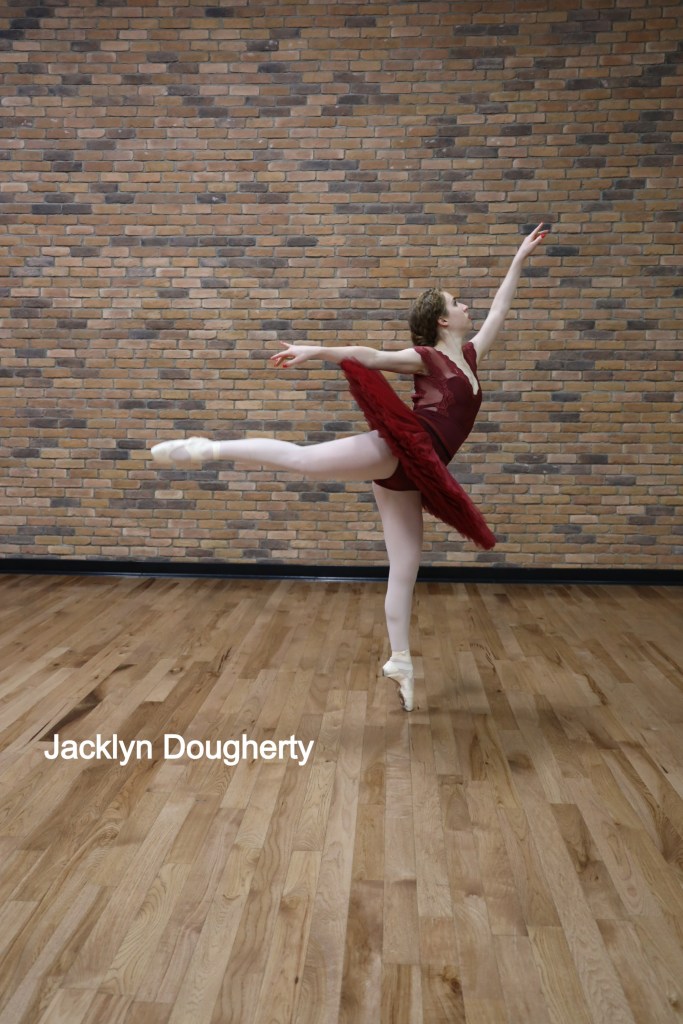
For clear visual demonstrations of these steps performed with correct classical placement, visit Jacklyn Dougherty’s YouTube channel, which provides concise, professional ballet tutorials and visual references used by dancers worldwide.
Mastering these jumps builds confidence, clarity, and classical polish in both petite and grand allegro combinations.
Much Love
Jacklyn Dougherty and Dr. Joni Dougherty Ed.D