Coupé (Koo-PAY): How to Do the Ballet Step
The coupé is a foundational ballet step that teaches precision, coordination, and clean footwork. The word coupé comes from the French verb couper, meaning “to cut,” which describes how one foot quickly replaces or “cuts” in front of or behind the other. Although coupé is a small movement, it plays an essential role in transitions, jumps, turns, and allegro combinations across all levels of ballet.
What Is a Coupé?
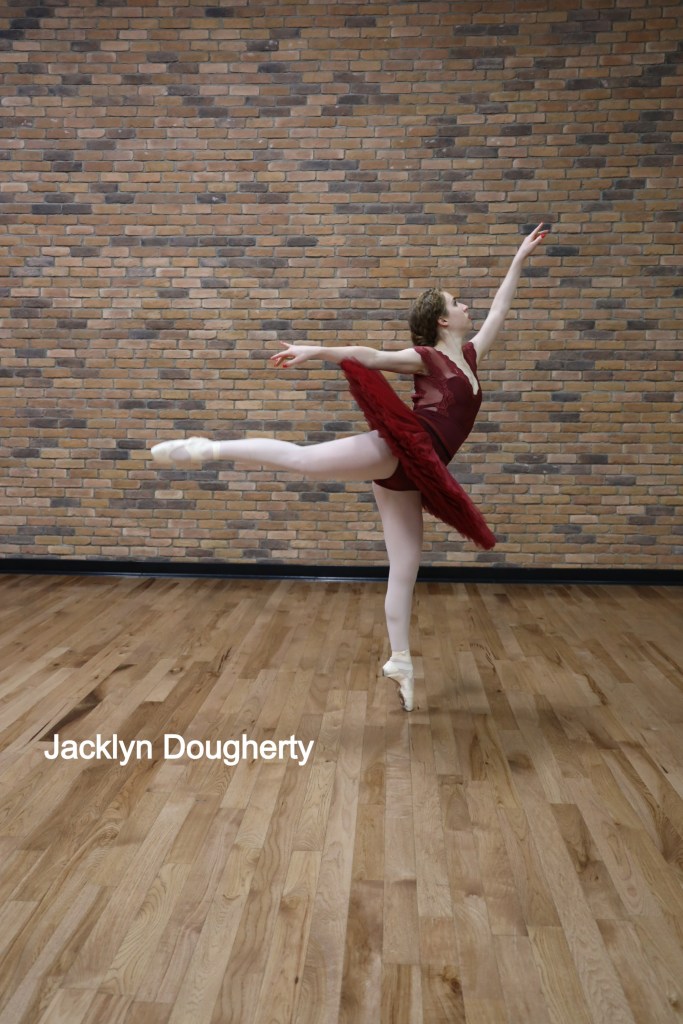
In ballet, a coupé is a position and an action. One foot is placed at the ankle of the supporting leg, either in front (coupé devant) or behind (coupé derrière). The toes of the working foot point downward, with the heel slightly forward, creating a clean and articulate shape. The supporting leg remains straight and turned out, while the working leg is light and precise.
How to Do a Coupé Step-by-Step
Begin in fifth position with proper turnout, lifted posture, and engaged core. Shift your weight onto the supporting leg, usually with a gentle plié. As you straighten the supporting leg, slide the working foot along the floor and “cut” it into place at the ankle. For coupé devant, the working foot crosses in front of the ankle; for coupé derrière, it places just behind the ankle. The movement should be quick and exact, with no extra motion.
Keep the knees straight and the turnout active from the hips. The foot must remain pointed, and the ankle should be clearly defined. Avoid gripping the toes or sickling the foot. The upper body stays calm and upright, allowing the clarity of the footwork to stand out.
Using Coupé in Combinations
Coupé is rarely performed on its own. It is commonly used as a preparation for jumps such as jeté, assemblé, or sissonne, and for turns like pirouettes or piqué turns. In these cases, coupé acts as a quick transition that shifts weight efficiently and sets up the next movement. The cleaner the coupé, the smoother the transition will be.
In allegro combinations, coupé often appears in rapid sequences, requiring speed and accuracy. The dancer must think of the foot “cutting” decisively into place without hesitation. Practicing coupé slowly at the barre helps build muscle memory that carries into faster center work.
Common Mistakes to Avoid
One frequent error is lifting the foot too high or allowing it to float away from the ankle. Another is losing turnout or bending the supporting knee unnecessarily. The coupé should feel sharp and contained, not loose or sloppy. Precision is more important than force.
Why Coupé Matters
Mastering coupé strengthens foot articulation, improves coordination, and refines transitions between steps. Though small, it is a vital building block of classical ballet technique. When executed well, coupé adds clarity and polish to a dancer’s movement, proving that even the simplest steps deserve careful attention and artistry.
Jacklyn Dougherty and Dr. Joni Dougherty