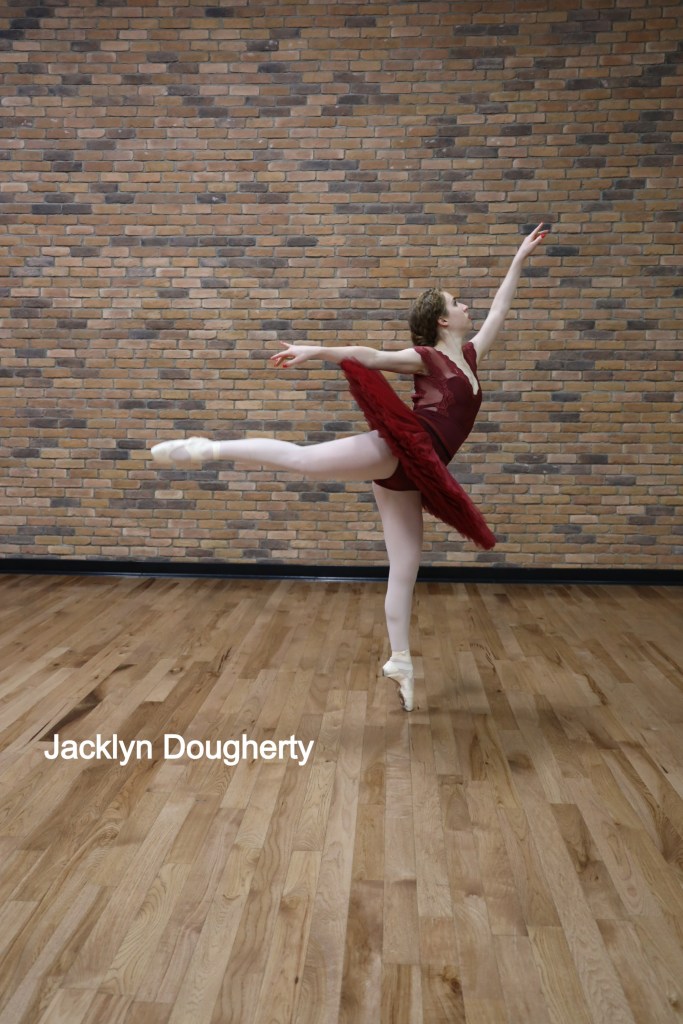
Ballotté (Bah-loh-TAY)
Tossed step.
In Cecchetti Ballet: Swinging, floating step used in
advanced allegro.

Think About: Keep your core steady as the legs traveling.
Ballotté (Bah-loh-TAY) Ballet: The Lightly Tossed Step
In classical ballet, Ballotté (bah-loh-TAY) is a step that feels playful, airy, and gently suspended. Its name comes from the French word ballotté, meaning “tossed lightly,” which perfectly describes the quality dancers aim to achieve. Ballotté combines traveling movement with elevation, requiring coordination, musicality, and a refined sense of balance to make the step look effortless.
What Is Ballotté in Ballet?
Ballotté is a jump from two feet to two feet, where the dancer appears momentarily suspended in the air. The legs open slightly apart while the body lifts, and the dancer lands softly, often continuing forward or diagonally. Unlike jumps that emphasize height alone, Ballotté highlights buoyancy and directional flow, giving the impression of being gently tossed upward and forward.
This step frequently appears in petit and grand allegro, often used to transition between traveling jumps such as jetés and assemblés.
How Ballotté Is Performed
A traditional Ballotté traveling forward follows these basic principles:
- Begin in a plié, often from fifth or a preparatory step.
- Push off the floor with both feet, jumping upward and slightly forward.
- Open the legs softly in the air, creating a subtle separation.
- Land quietly on both feet, returning through plié to absorb the jump.
The arms coordinate naturally with the jump, usually moving through first or open positions to support lift and balance. The torso remains upright and buoyant, allowing the jump to appear light rather than forced.
Musicality and Timing
Ballotté is closely tied to musical phrasing. The jump must rise on the music and melt back into the floor on the landing. Rushing the takeoff or landing breaks the illusion of suspension, while good timing creates a floating effect.
Dancers should think of Ballotté as a continuous motion rather than a sharp jump. The feeling is upward and forward, with a soft, elastic quality.
Common Mistakes to Avoid
Because Ballotté requires both power and control, dancers often encounter these challenges:
- Landing too heavily, losing lightness
- Stiff legs in the air, rather than soft, elastic extension
- Overuse of the arms, which can disrupt balance
- Poor alignment, especially through the hips and torso
Maintaining a strong plié and controlled core helps prevent these issues and supports a smoother execution.
Why Ballotté Is Important in Ballet Training
Ballotté helps dancers develop:
- Coordination between legs, arms, and torso
- Strength and elasticity in plié
- Control during traveling jumps
- Confidence in allegro combinations
Because it lands on two feet, Ballotté is often used as a bridge step, preparing dancers for more complex traveling jumps and combinations.
Learning Ballotté with Jacklyn Dougherty
Ballet educator Jacklyn Dougherty emphasizes softness, musicality, and clarity when teaching Ballotté. Her approach focuses on helping dancers find the sensation of suspension rather than forcing height, allowing the step to look fluid and expressive.
For clear demonstrations and ballet education content, explore Jacklyn Dougherty’s YouTube channel, where dancers of all levels can refine their technique and deepen their understanding of classical ballet.
Final Thoughts
Ballotté is a beautiful example of how ballet transforms athletic movement into artistry. With strong plié, coordinated arms, and thoughtful musical timing, this lightly tossed jump becomes elegant and buoyant. When danced well, Ballotté feels as though the dancer is briefly lifted by the music itself.
Focus on softness, trust your plié, and let Ballotté carry you forward with grace.
Much Love
Jacklyn Dougherty