Ballonné (Bah-lon-NAY)
Bouncing step.
In Cecchetti Ballet: The working leg extends and retracts
like a spring—elastic and controlled.
Ballonné (Bah-lon-NAY) Ballet: The Art of the Bounced Step
In classical ballet, Ballonné (bah-lon-NAY) is a step that appears light, buoyant, and deceptively simple. Its name comes from the French word ballon, meaning “bounce” or “spring,” and that quality defines the step. Ballonné showcases a dancer’s ability to rise, suspend, and land with control—creating the illusion of floating momentarily in the air before softly returning to the floor.
What Is Ballonné in Ballet?
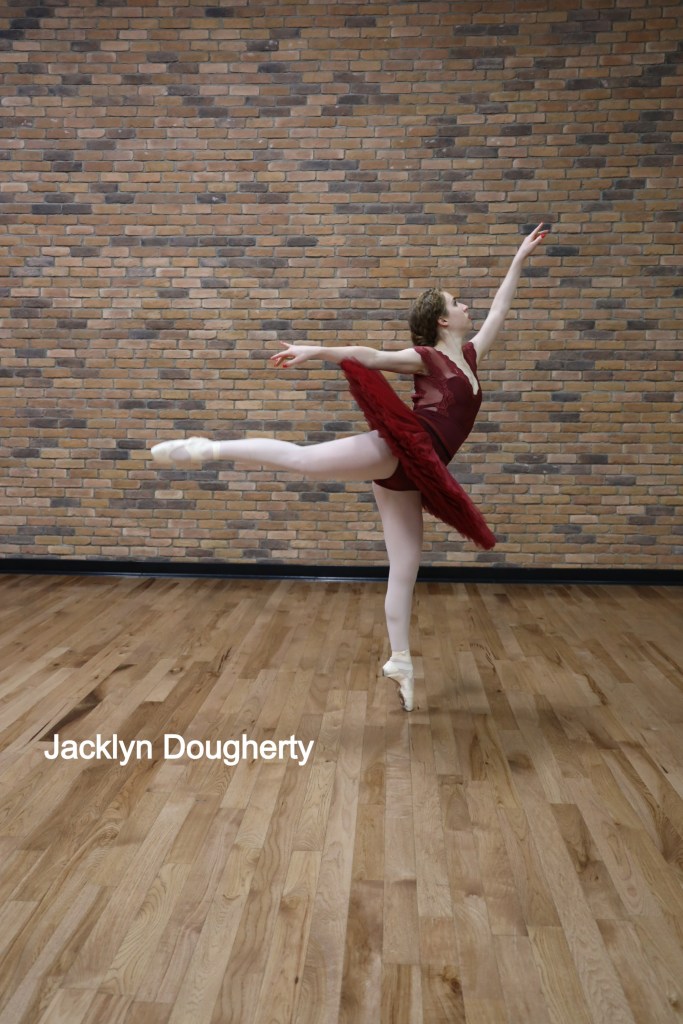
Ballonné is a jump from one foot to the same foot, where the working leg opens to the side (à la seconde), front, or back while the supporting leg pushes off the floor. The dancer springs upward, extends the working leg, and then lands gracefully back on the same supporting foot.
Unlike some jumps that travel across the floor, Ballonné can be stationary or traveling, depending on the choreography. It is commonly seen in petit allegro, where precision, speed, and elevation are key.
How Ballonné Is Performed
A basic Ballonné à la seconde typically follows this structure:
- Begin in a small plié on the supporting leg.
- Push off the floor, jumping straight up.
- Extend the working leg to the side in the air.
- Land softly back on the original supporting foot, returning through plié.
The arms usually coordinate through low fifth, first, or open positions, depending on style and level. The torso remains lifted and centered, helping maintain balance and control during the jump.
The Importance of Ballon
Ballonné is an excellent step for developing ballon—the ability to appear suspended in the air. Even though the jump may be small, the dancer must give the illusion of time slowing down at the top of the jump. This requires:
- Strong plié
- Quick yet controlled push-off
- Coordinated use of the feet and ankles
- Calm, stable upper body
Without these elements, Ballonné can look flat or heavy rather than buoyant.
Common Mistakes Dancers Make
Because Ballonné is often introduced early, dancers may underestimate its technical demands. Common errors include:
- Insufficient plié, which reduces height and softness
- Rushing the landing, making the jump look abrupt
- Over-throwing the working leg, disrupting balance
- Tension in the shoulders or arms, which breaks the illusion of lightness
A successful Ballonné should look effortless, even though it requires significant strength and coordination.
Why Ballonné Is Essential in Training
Ballonné builds foundational skills that transfer to many other jumps, including assemblé, jeté, and cabriole. It strengthens:
- Ankles and calves
- Balance on one leg
- Coordination between upper and lower body
- Musical timing and control
Because the dancer lands on one foot, Ballonné is also an excellent exercise for improving stability and alignment.
Learning Ballonné with Jacklyn Dougherty
Ballet educator Jacklyn Dougherty emphasizes clean technique, proper foot articulation, and musical timing when teaching Ballonné. Her instructional approach breaks the step down clearly, helping dancers understand not just how to jump, but how to land with control and grace.
For dancers, teachers, and parents looking for high-quality ballet education, be sure to explore Jacklyn Dougherty’s YouTube channel, where she shares clear explanations and demonstrations of classical ballet steps for all levels.
Final Thoughts
Ballonné may be small in size, but it plays a big role in a dancer’s technical development. It teaches dancers how to spring from the floor, control the body in the air, and return softly with confidence. When performed with strong plié, precise timing, and calm upper body, Ballonné becomes a beautiful display of classical lightness and control.
Master the bounce, find the suspension, and let your Ballonné truly fly.

Think About: Bounce from muscle, not momentum