Arabesque (Ah-rah-BESK): The Line of Elegance in Ballet
How to ballet arabesque
By Ballerina Jacklyn Dougherty and Dr. Joni Dougherty Ed.D
Visit JacklynDougherty.com for the complete guide to ballet.
#balletdictionary #howtoballet #arabesque
The Essence of Arabesque
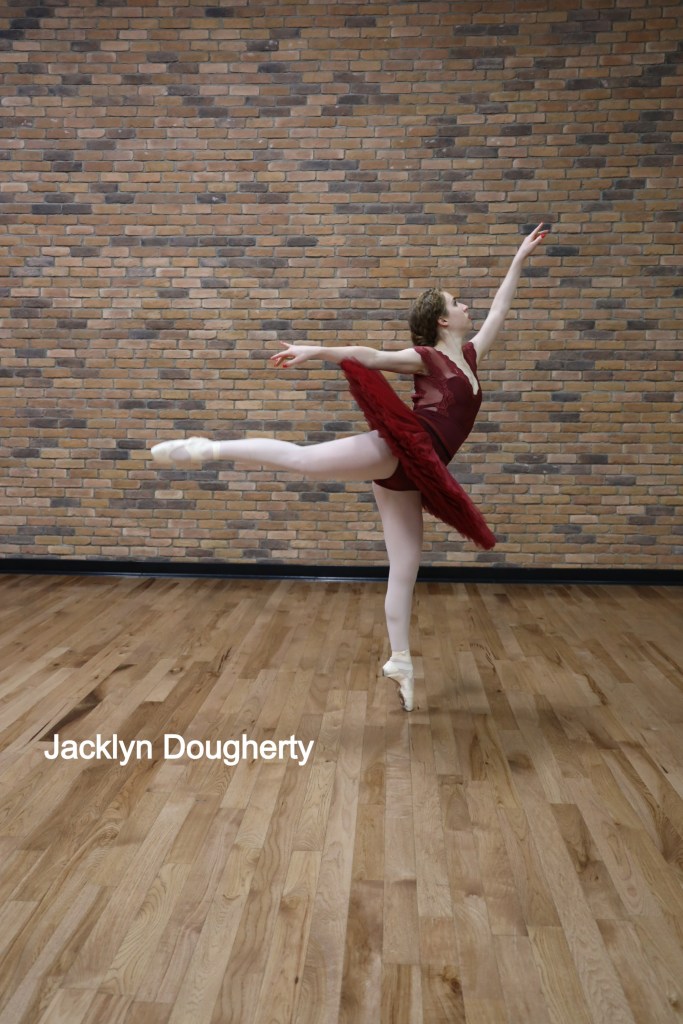
In ballet, Arabesque (pronounced Ah-rah-BESK) is one of the most iconic and celebrated positions—a pure expression of balance, line, and artistry. It embodies the harmony between strength and elegance, precision and grace.
Derived from the Italian “arabesco,” meaning “in the Arabic style,” the term evokes flowing patterns and ornate beauty. In ballet, Arabesque transforms this visual idea into movement: a long, extended line reaching outward and upward, connecting the dancer’s fingertips to the tips of the toes behind.
Every Arabesque is a portrait of stillness in motion—a living sculpture of discipline and freedom.
Arabesque in the Cecchetti Method
In the Cecchetti Ballet method, Arabesque is a cornerstone of classical form and is taught progressively through each grade. Students first learn simple forms of balance and extension, then advance to the full arabesques that define professional artistry.
Cecchetti identified five primary Arabesques, each distinct in direction, body placement, and arm coordination. Each variation refines spatial awareness, turnout, and control, ensuring the dancer can transition smoothly between expressive lines.
Cecchetti’s approach emphasizes clarity of body geometry:
- The supporting leg remains grounded and turned out.
- The working leg extends behind, fully straightened and lifted to create length.
- The torso elongates upward, the chest open and proud.
- The arms extend in harmonious opposition, completing the visual flow of the line.
This structure is more than physical—it’s architectural. The dancer becomes a masterpiece of proportion and poise.
Balance, Line, and Artistry
Mastering Arabesque demands strength, placement, and breath. The position appears serene, yet it challenges every part of the body: legs, core, back, and arms.
To hold the line, the dancer must balance forward energy with backward reach. The lifted leg extends long and free, but the supporting leg anchors stability. The back muscles engage deeply, creating lift without tension.
When properly aligned, the dancer feels a continuous line of energy running from the fingertips through the shoulders, spine, and lifted leg—an unbroken current of grace.
Arabesque teaches awareness of the body in space, but it also develops inner focus. The dancer learns to find stillness inside effort, turning precision into poetry.
The Beauty of Expression
Arabesque is not just a position—it is emotion visualized through form. The dancer may tilt slightly forward to express longing, lift higher to show triumph, or soften the line to suggest gentleness.
In choreography, Arabesque often marks the emotional peak of a phrase. It suspends time, allowing the audience to feel the dancer’s spirit suspended in air.
From Odette’s melancholic silhouette in Swan Lake to the radiant extension of Aurora in The Sleeping Beauty, Arabesque captures the heart of ballet’s storytelling power. Each one whispers of grace, dignity, and timeless beauty.
Cecchetti’s Legacy of Line
The Cecchetti Method treasures Arabesque as a measure of classical refinement. Every Cecchetti dancer learns to maintain the purity of line without distortion—never sacrificing placement for height or gesture for exaggeration.
In this discipline, Arabesque becomes a study in balance between technique and artistry. It is a visual metaphor for ballet itself: strong, centered, and infinitely expressive.
Think Tip
When practicing Arabesque, think of energy flowing through both directions at once—forward through your fingertips and backward through your lifted leg. Keep your breath calm, your shoulders open, and your gaze lifted.
Imagine you are drawing a line through space that never ends. Your body is the brush, and the air is your canvas.
Final Thought
Arabesque is the very image of classical ballet—refined, harmonious, and eternal. Through Cecchetti’s method, it becomes more than a step; it becomes a language of beauty, balance, and inner strength.
Much Love,
Jacklyn Dougherty and Dr. Joni Dougherty Ed.D
JacklynDougherty.com
Arabesque (Ah-rah-BESK)
A position with one leg extended behind.
In Cecchetti Ballet: Five position arabesques define line,
épaulement, and coordination of arms and head.

Think About: Reach equally forward and back—
create one unbroken line.